What “All Levels” Means in Happy Wheels
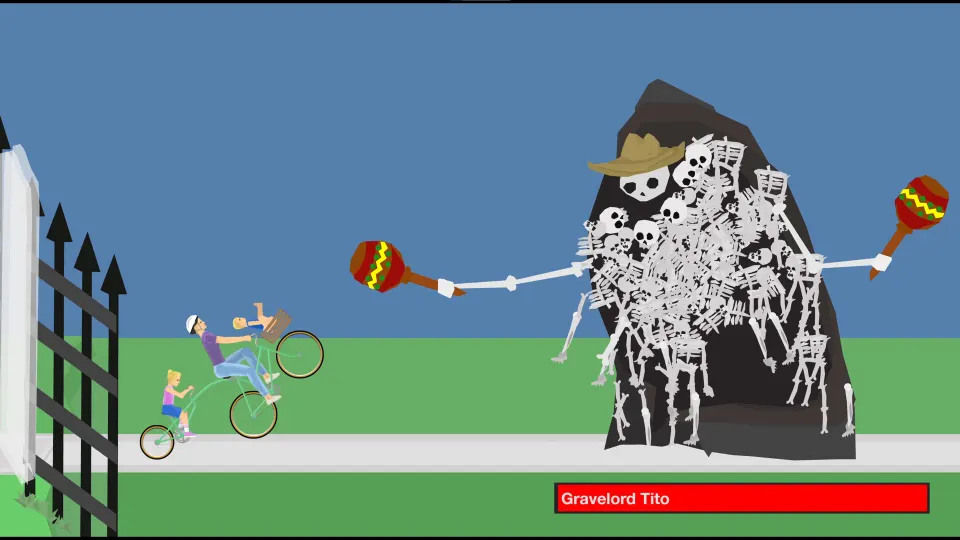
Happy Wheels has far more to play than a single fixed campaign, so knowing where to look saves time and frustration. The phrase “happy wheels all levels” can mean the character-based stages on mobile, the hand-picked Featured Levels on the main game, or the enormous collection of player-made courses.
The core appeal is that every run can fail differently. Physics, loose body parts, unstable vehicles, traps, and shortcuts turn even a familiar stage into a problem-solving challenge. Treat each level as a route to learn, not just an obstacle to force through at full speed.
There are two useful ways to organize your play:
- Follow official character stages if you want a structured progression.
- Browse Featured Levels when you want polished community creations.
- Search user levels by format when you want a specific challenge, such as sword throws or rope swings.
- Replay difficult stages with one goal at a time: survival, speed, or a cleaner route.
| Level collection | What it contains | Best for |
|---|---|---|
| Character stages | Fixed stages built around specific playable characters | Learning controls and vehicle behavior |
| Featured Levels | Community levels selected for the main Play menu | High-quality variety and memorable scenarios |
| User levels | A huge library made with the level editor | Finding niche challenges or new formats |
| Bonus stages | Extra character challenges outside the main stage groups | Practicing unusual mechanics |
Complete the Character Stages First
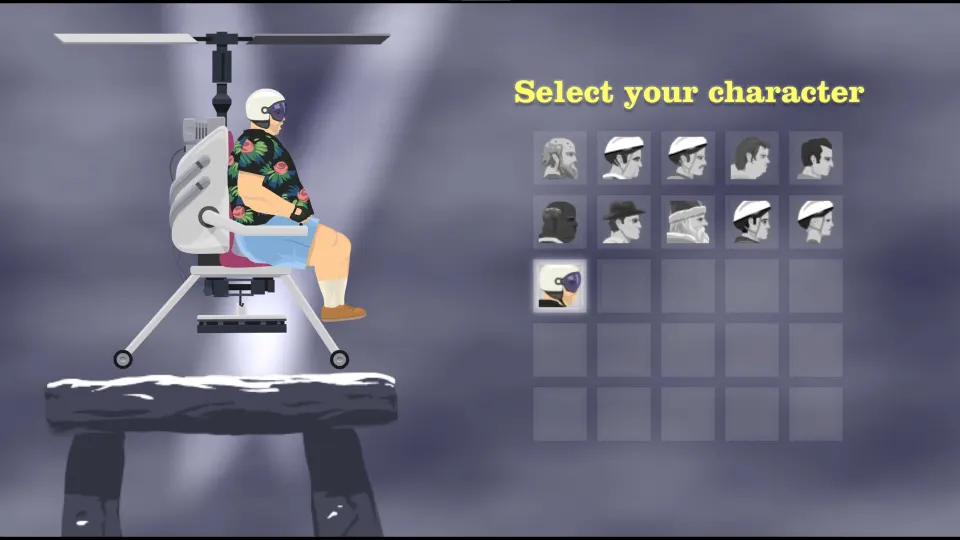
For players asking about happy wheels all levels on mobile, the most direct path is completing each character’s numbered stages. The stage groups are organized around Business Guy, Irresponsible Dad, Wheelchair Guy, Effective Shopper, and Pogostick Man.
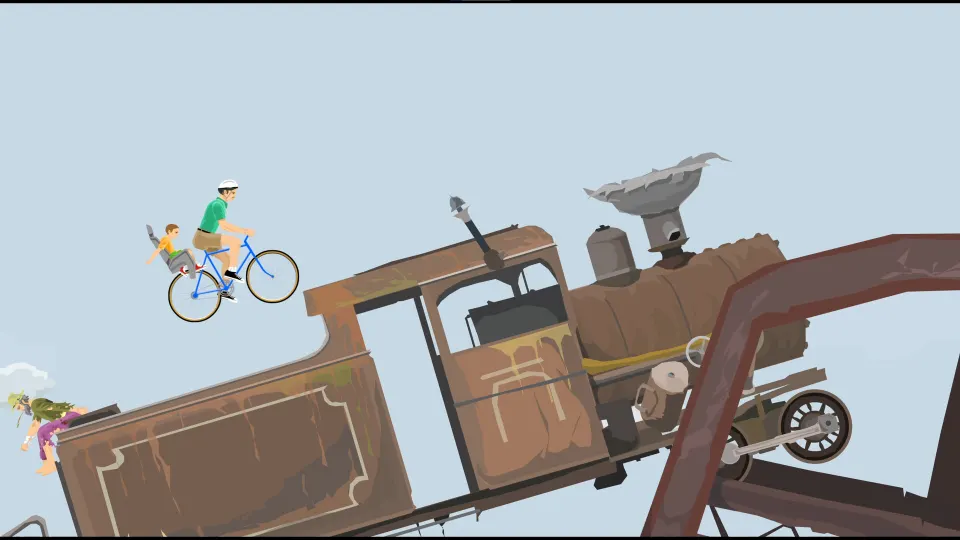
Each group teaches a different rhythm. Business Guy’s Segway is comparatively stable, but it can snag on small terrain changes. Irresponsible Dad’s bike rewards balance and controlled landings, while Wheelchair Guy can use thrust for powerful movement but is dangerous to mishandle. Effective Shopper is bulky and harder to turn sharply. Pogostick Man is often the most technical because momentum and body angle matter constantly.
| Character | Primary challenge | Reliable approach |
|---|---|---|
| Business Guy | Keeping the Segway upright through hazards | Brake before drops and avoid overcorrecting |
| Irresponsible Dad | Balancing bike momentum with a passenger | Land rear wheel first and keep jumps shallow |
| Wheelchair Guy | Managing boost without flipping | Use brief thrust bursts instead of holding it |
| Effective Shopper | Steering a large, heavy cart | Take wide lines and slow down before narrow gaps |
| Pogostick Man | Timing jumps and controlling rotation | Charge jumps consistently and lean before landing |
A clean completion order is usually more useful than jumping between groups:
- Finish the first five levels for each character.
- Return to complete stages six through ten.
- Tackle levels eleven through fifteen after you understand each vehicle.
- Save the later Pogostick Man stages and bonus levels for last.
- Revisit any stage where a completion depended on luck rather than a repeatable method.
Do not assume the fastest-looking route is safest. A slower approach that preserves your character’s head, torso, and vehicle control is usually better than a dramatic jump that leaves you crawling toward the finish.
Find the Best Featured and User Levels
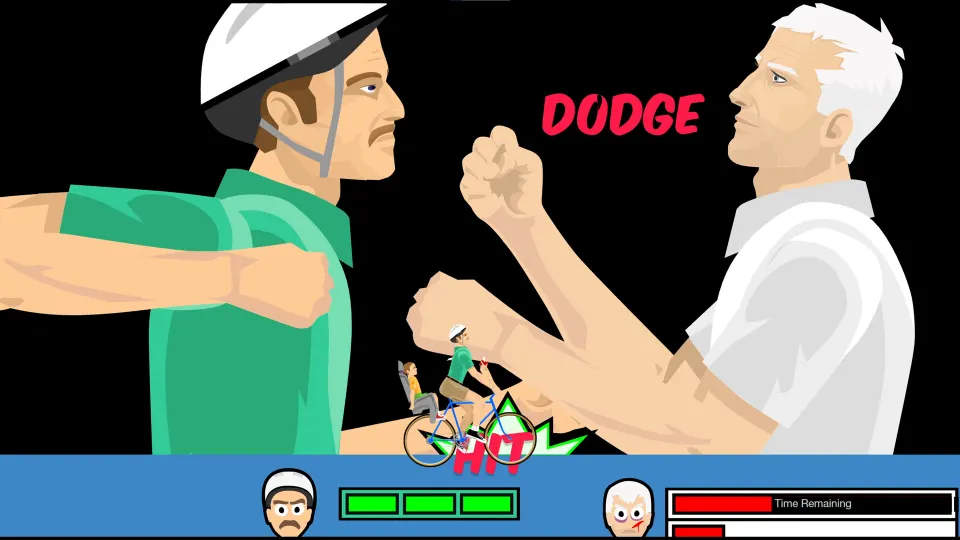
Featured Levels are the easiest way to find community courses that have been selected for quality, originality, or entertainment. They are accessed from the main Play menu and include everything from obstacle courses and racing stages to themed adventures, boss encounters, and elaborate physics setups.
Not every enjoyable level is featured. The user-level browser is full of strong courses, but its size makes targeted searches more effective than scrolling randomly. Search broad level types first, then try several creators or high-rated versions before deciding that a format is not for you.
| Level type | Typical objective | Helpful skill |
|---|---|---|
| Harpoon Run | Outrace or survive escalating projectile traps | Keep momentum while making small steering corrections |
| Sword Throw | Throw blades at targets or activate victory conditions | Aim deliberately and avoid wasting weapons |
| Rope Swing | Grab, swing, and release at the right moment | Build a smooth arc before attempting distance |
| Spike Fall | Survive a vertical descent through hazards | Keep your body centered and react late |
| Ball Throw | Toss balls into targets that activate triggers | Learn angles and watch for delayed traps |
| Bottle Run | Cross falling bottles after a speed boost | Commit to momentum and minimize side-to-side movement |
| BMX/Stunt Park | Ride ramps, rails, loops, and jumps | Manage rotation before touching down |
| Obstacle Course | Navigate mixed hazards to a finish trigger | Slow down enough to identify the next threat |
A few Featured Levels are particularly useful as benchmarks because they show the range Happy Wheels can support. BMX_Park II demonstrates bike-oriented stunt design. Happy Green Hills and Speed bridge emphasize flowing movement. Laboratory 1, DC metro station, Viking Revenge 3, and the Dawn of the Dead stages show how creators use environments, hazards, and specialized objects to make levels feel like small adventures.
When choosing a player-made stage, a high rating is a helpful clue, not a guarantee. A good level makes its goal understandable quickly, creates a reason to retry after failure, and avoids making every success depend on random physics.
Route Skills That Work Across Every Level
The fastest way through happy wheels all levels is not memorizing every trap. It is building habits that keep the ragdoll physics manageable when a level surprises you.
First, learn to separate acceleration from commitment. Pressing forward continuously can turn a small bump into an unrecoverable flip. In difficult sections, advance in short bursts, stabilize, then make the next move. This is especially important in harpoon runs, glass courses, and narrow obstacle layouts.
Second, protect the character before protecting the vehicle. A damaged bike, Segway, or cart may still reach the finish. A destroyed head or torso ends the attempt. If a crash is unavoidable, steer the body away from spikes, blades, and heavy falling objects.
Third, identify the level’s reset point. In a rope swing, that may be the release moment. In a sword throw, it may be the order of targets. In a bottle run, it may be entering the bottle bridge with enough speed. Restarting immediately after missing that point is often faster than trying to rescue a broken run.
| Situation | Common mistake | Better decision |
|---|---|---|
| Steep drop | Holding acceleration until the edge | Reduce speed and set the vehicle angle first |
| Projectile trap | Dodging wildly after the first shot | Maintain a predictable line and make small inputs |
| Rope swing | Releasing at maximum speed every time | Release when the swing points toward the landing |
| Sword throw | Throwing every weapon quickly | Pause, aim, and preserve a backup throw |
| Spike fall | Steering early and continuously | Wait to see the opening, then make one correction |
| Vehicle damage | Restarting after losing a wheel or rider | Continue if the torso can still reach the goal |
For speed-oriented replays, watch successful runs only to understand decisions, not to copy inputs frame for frame. Physics can produce slight differences between attempts. Learn why a runner brakes, boosts, leans, or pauses, then adapt the technique to your own position.
FAQ
How many Happy Wheels levels are there?
There is no single permanent total. Mobile character groups have fixed numbered stages and bonus content, while the main game also includes Featured Levels and a continuing library of user-created levels. New community uploads mean the overall count changes over time.
What is the best order for happy wheels all levels?
Start with early levels for every character, then complete each character’s later stages. After that, use Featured Levels for polished community content and search user levels by format, such as harpoon runs, rope swings, or sword throws.
Are Featured Levels easier than user levels?
Not necessarily. Featured Levels are selected for quality and entertainment, not only difficulty. Many are approachable for new players, but others contain demanding routes, hidden mechanics, or precision-heavy hazards.
Which character is easiest for beginners?
Business Guy is often the easiest place to begin because the Segway is stable and its movement is straightforward. Effective Shopper is also useful for slower play, while Pogostick Man usually requires more precise timing.
Why do popular user levels repeat similar ideas?
The editor makes certain formats easy to understand and enjoyable to replay. Harpoon runs, ball throws, sword throws, obstacle courses, bottle runs, and spike falls became common because each gives players an immediate objective and a clear way to improve.