Why Impossible Levels Are Worth Playing
Happy Wheels impossible levels matter because they turn the game’s chaotic physics into a genuine skill test. A level may look unfair at first, but many can be cleared once you identify the intended route, preserve the right body part or vehicle piece, and repeat one reliable input sequence.
“Impossible” is usually a player-made label, not a literal promise that the level cannot be finished. Community levels use the name for everything from demanding pogo jumps to trap-filled obstacle courses, harpoon runs, spike falls, and puzzles that require sacrificing a passenger or triggering an explosive at the right time.
The important shift is to stop treating every death as random. In Happy Wheels, a failed attempt often reveals useful information: which object activates first, where the safe landing zone is, or whether you need speed, restraint, or a different character.
| What makes a level feel impossible | What it usually tests | Best response |
|---|---|---|
| Tight spike fall | Positioning during a fast drop | Start close to a wall and make small corrections |
| Harpoon or arrow run | Timing and body protection | Use the vehicle or passenger as cover when possible |
| Pogo challenge | Momentum control | Build a steady bounce instead of forcing maximum height |
| Mine puzzle | Trigger order | Test whether a mine opens a path, clears hazards, or launches you |
| Sword or ball throw | Aim and sequence recognition | Watch where objects land before changing your throw angle |
Do not judge difficulty only by a level’s title. Levels named “99% Impossible,” “Impossible Challenge,” or “Pogo Impossible” can range from brief gimmicks to long, technical courses. Ratings can help find levels players enjoyed, but they do not reliably measure difficulty; a hard level may receive a low rating simply because many players quit before understanding it.
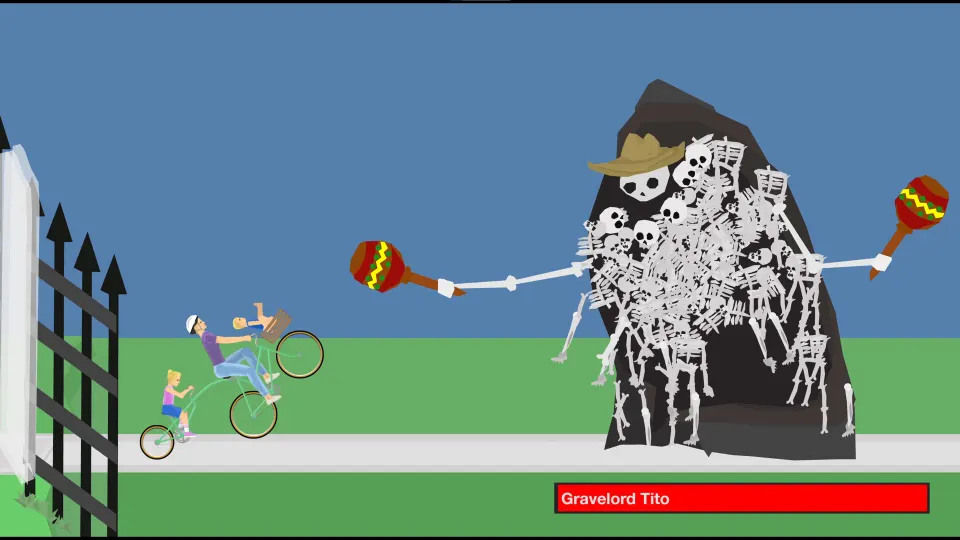
Find Levels That Match Your Skills
The level browser is the best place to begin. Search terms such as “impossible,” “hard,” “pogo,” “harpoon,” “spike fall,” and “obstacle course” uncover different types of challenge. Start with short levels so you can practice a mechanic repeatedly without spending several minutes reaching it.
Creator pages show how broad the “impossible” category can be. Some creators build focused challenges around a single mechanic, while others combine traps, movement puzzles, and survival sections. That variety is useful: if one style frustrates you, switch to another rather than assuming every difficult level plays the same way.
| Search term | Typical challenge | Good for practicing |
|---|---|---|
| Impossible pogo | Narrow jumps, vertical movement, unstable landings | Bounce rhythm and midair balance |
| Harpoon run | Projectiles, cramped corridors, sudden damage | Reaction timing and protective positioning |
| Spike fall | Controlled descent through hazards | Small directional adjustments |
| Sword throw | Object interaction and target selection | Aim, timing, and puzzle reading |
| Ball throw | Precision shots and chain reactions | Throw angle and object physics |
| Obstacle course | Mixed hazards and vehicle handling | Route planning and momentum control |
Use a simple progression when searching:
- Begin with a level that has one obvious obstacle type.
- Play it several times without changing characters immediately.
- Identify the exact moment that causes the failure.
- Search for a similar level with a shorter layout if the mechanic still feels unclear.
- Return to longer courses after you can clear the core obstacle consistently.
A short pogo course teaches more than ten blind attempts at a massive gauntlet. Likewise, an easy-looking harpoon level can be a better training ground than an elaborate “99.999% impossible” title because you can isolate your timing mistake quickly.
Community-created levels also vary in polish. Some are carefully built around a clear solution, while others rely heavily on unpredictable physics or unclear triggers. If a level repeatedly kills you before you can learn anything, move on. Challenge is rewarding when each attempt gives you a better plan.
Core Strategies for Beating Brutal Courses
The best approach is deliberate experimentation. Make one change per attempt: start slower, lean earlier, hold a direction longer, release later, or aim at a different object. When you alter five things at once, you cannot tell what actually helped.
In many Happy Wheels impossible levels, survival is not the only goal. You may need to preserve your head, keep enough control to reach the finish, carry an object, or intentionally lose a passenger to activate a mechanism. Look for objects that seem unusually placed. Mines, ropes, breakable glass, cannons, platforms, and loose weapons are often part of the solution.
| Situation | Common mistake | More reliable tactic |
|---|---|---|
| Entering a spike fall | Holding one direction continuously | Make tiny corrections and prioritize a clear gap |
| Approaching a mine | Treating every explosion as instant failure | Test whether the blast removes a blocker or creates momentum |
| Pogoing onto a ledge | Bouncing as high as possible | Control the landing angle and reduce sideways drift |
| Escaping harpoons | Racing forward with no plan | Pause or reposition when a safe timing window appears |
| Throwing an object | Repeating the same rushed shot | Adjust one variable: angle, release time, or target |
Learn to recognize three kinds of progress:
- Route progress: You discovered where to go or which object to activate.
- Execution progress: You know the route but need cleaner timing.
- Consistency progress: You can reach a section often enough to practice the next one.
These are different problems. Route progress calls for observation; execution progress calls for controlled repetition; consistency progress calls for reducing unnecessary risk. If you have already solved the route, do not keep inventing new paths after every bad landing.
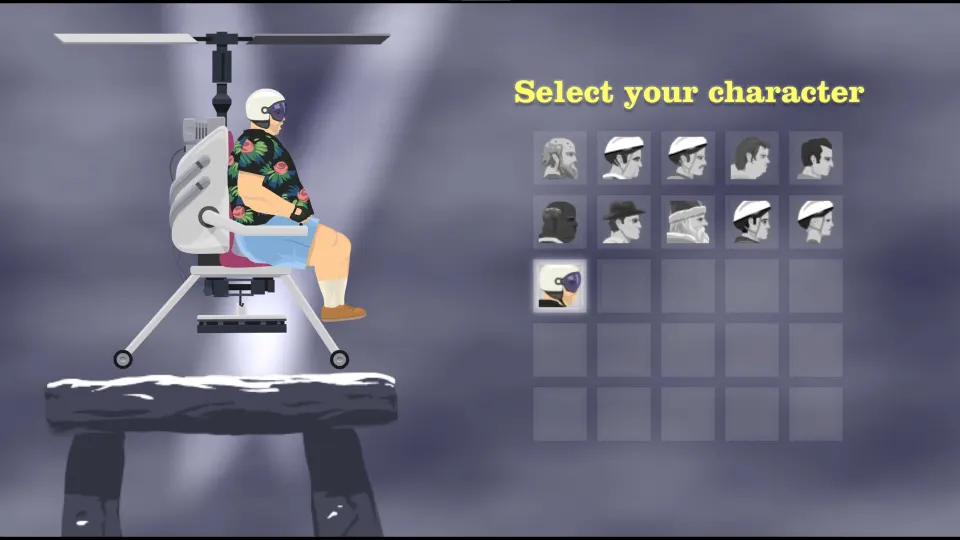
Character choice matters too. A vehicle can absorb damage, provide momentum, or create a larger target for hazards. A passenger may accidentally block an attack, but can also destabilize a jump. The Pogo Stick Guy excels in vertical, precision-oriented challenges, while vehicle-based characters may be better for courses built around speed, ramps, or collisions.
There is no universal “best” character for every impossible level. Use the character the level seems designed around first. If the level offers a choice, consider what the obstacle demands: controlled height, heavy impact, a shield, a throwable passenger, or a compact body.
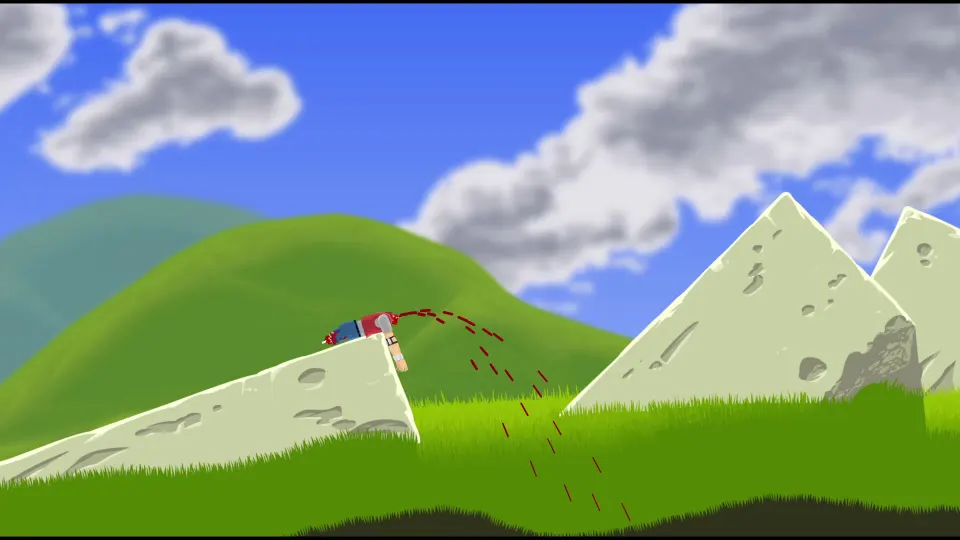
Practice Smarter, Not Longer
Set a small goal for each session. Rather than deciding to finish a huge level immediately, aim to clear its first trap three times, learn the mine sequence, or reach a new checkpoint-equivalent point consistently. This keeps frustration from turning into careless inputs.
Restarting is part of the game’s language. A quick restart after an unrecoverable crash saves time, but do not restart merely because your character looks injured. Happy Wheels frequently allows bizarre recoveries. If your head is intact and you still have enough movement to reach the next platform, keep going long enough to see whether the run remains viable.
When you are stuck, use this reset routine:
- Watch the first few seconds of the level without rushing.
- Name the immediate hazard and your expected destination.
- Try one conservative attempt focused only on surviving.
- Try one intentional experiment with a trap, mine, rope, or object.
- Repeat the version that produced the most useful information.
Video playthroughs can help when a puzzle’s intended interaction is unclear, especially for levels involving chained explosives, hidden routes, or precise object throws. Watch only enough to understand the principle, then return to the level and execute it yourself. Copying every input may clear the course, but learning why the route works makes future difficult levels much easier.
The most satisfying clears often come after a near miss. If you reached a platform once, survived a blast once, or almost made a jump, that is evidence the level is possible for you. Turn that lucky-looking attempt into a repeatable setup: note your starting position, speed, direction, and when you released the controls.
FAQ
Are happy wheels impossible levels actually unbeatable?
Usually, no. The label is commonly used for difficult user-created levels, exaggerated titles, or challenges designed around a tricky mechanic. Some may be poorly balanced or unreliable, but many have a workable route that becomes clearer through repeated attempts.
What are the hardest types of impossible levels?
Pogo challenges, spike falls, harpoon runs, sword throws, and multi-step mine puzzles are among the most demanding styles. The hardest type depends on whether you struggle more with precise movement, reaction timing, or puzzle-solving.
Should I use a walkthrough?
Use one when you cannot identify the intended route after several meaningful experiments. A short video can reveal the key interaction, such as using a mine to clear an obstacle or using a passenger to trigger a hazard, without removing the challenge of performing it.
Why do I die after making the correct jump?
Landing angle, momentum, and loose body parts can change the result even when the jump looks right. Try approaching more slowly, leaning differently before takeoff, or releasing movement controls before the landing.
How do I get better at happy wheels impossible levels?
Practice one mechanic at a time, make only one adjustment per attempt, and choose short courses before long gauntlets. The goal is not to avoid deaths; it is to make every death explain the next attempt.